





New prisons planned in Spending Review
The government has released the first details of its plans to build nine new prisons in England and Wales as a means of modernising the prison estate. As part of his spending review on 25 November, George Osborne announced the swift construction of five prisons by 2020, the funding for which will be raised by closing many inner city Victorian prisons and selling the land for development into new homes.
The Treasury said that the plans will make the country’s prison system “fit for the 21st century”. They have estimated that each of the new super prisons will cost between £270m and £320m, and require the movement of 10,000 inmates, in an attempt to save an estimated £80m a year.
The first to be sold will be the Victorian Grade II-listed prison at Reading (with the literary association to Oscar Wilde), which was built in 1844 and has been closed for two years. Planned closures are believed to include London’s HMP Pentonville and HMP Brixton, as well as HMP Leeds in Armley. In addition to the nine new prisons, Wrexham is currently constructing a new prison and expansions are underway at HMP Stocken in Rutland, and HMP Rye Hill in Warwickshire.
The plans come as part of a spending cut of around 30% over the next four years on the part of four government departments. Osborne said, “This Spending Review is about reform as much as it is about making savings. One important step will be to modernize the prison estate. So many of our jails are relics from Victorian times on prime real estate in our inner cities.
So we are going to reform the infrastructure of our prison system, building new institutions which are modern, suitable and rehabilitative. And we will close old, outdated prisons in city centres, and sell the sites to build thousands of much-needed new homes. This will save money, reform an outdated public service and create opportunity by boosting construction jobs and offering more people homes to buy.”
It is understood that the new Justice Secretary Michael Gove made clear his plans to modernize the prison estate upon taking up this role. He has laid the blame for some of the failings of the current prison system on the building design, saying: “We will be able to design out the dark corners which too often facilitate violence and drug-taking.”
However, his words have been criticised by Frances Crook, Chief Executive of the Howard League for Penal Reform, who said: “It is not clear who owns the land on which the Victorian prisons sit and you can’t sell what you don’t own.
Secondly, it is not that the Victorian prisons are badly designed, they are just overcrowded. Oxford prison has been turned into a very swanky hotel so it is possible to make the buildings sanitary and functional and they are anyway quite beautiful. So the problem is not the buildings, it is the overcrowding.”
Featured articles
Check out some of the best features and news from Designing Buildings as well as key stories from around the web.

38% of Gen Zs feel safe when a fire door is wedged open.
Stunning images from around the world

Shortlist for CIOB’s Art of Building photography competition.

Guidance for conversion of traditional pre-1919 stone buildings.
Industrial heritage in the Ruhr
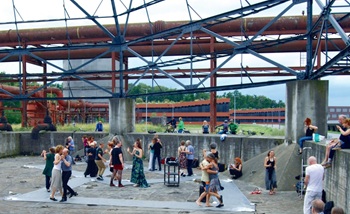
A marked difference to the fate of industrial landscapes in the UK.

Communities will be able to build their own clean energy.
Why diversity and inclusion matters for SMEs

CIOB’s D&I Charter shows how practical changes can support long-term growth.
Cut electricity bills to power growth

Coalition sends joint letter to the Chancellor.

Gasholders: a history in pictures. Book review.
Recognition, influence and growth

SocEnv identifies three strategic pillars in new strategy to 2045.

Discover the future of roofing, cladding and insulation.

New guidance for professional practice, cultural change and regulation in social housing.

The heritage of nuclear and conventional power stations.